
Just Breathe … it’s easy enough to say, but consider the difficulty without the forests of the world contributing via a tree’s unique ability to capture the carbon from our planet and release oxygen.
Trees are necessary for our survival, yet forests around the world are being cut down at an ever-increasing rate. Every minute, we lose 2400 trees to deforestation. This equates to 15 to 18 million hectares of forest destroyed each year — about the size of Belgium.
While there is an effort to offset the current rate of devastation through reforestation, younger and smaller trees cannot absorb the same level of CO2 as mature ones. The Arbor Day Foundation reports that in one year, a mature tree will absorb more than 48 lbs of CO2 from the atmosphere and in exchange, releases oxygen. The smaller and younger trees means a smaller amount of CO2 is absorbed and oxygen released.
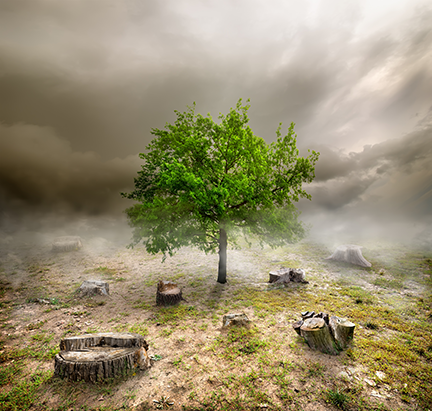
Unfortunately, the other downside to deforestation is that when the trees are cut down, all the carbon dioxide that’s been stored within them is released back into the atmosphere.
Why are trees so important and how exactly do they contribute to the world’s well-being?
It works like this …
Carbon dioxide is stored within the fibers of trees helping to clean the air and reduce the negative effects that CO2 has on our environment. Through photosynthesis, leaves pull in CO2 and water. Then, they use the sun’s energy to convert the CO2 into chemical compounds, such as sugars, that feed the tree. The by-product of that chemical reaction is oxygen.
The US Department of Agriculture posits that one large tree has the ability to provide a day’s supply of oxygen for up to four people. In other words, the power of one tree provides the very air we breathe!
That’s fairly significant and a reason not to cut down that tree in your front yard.
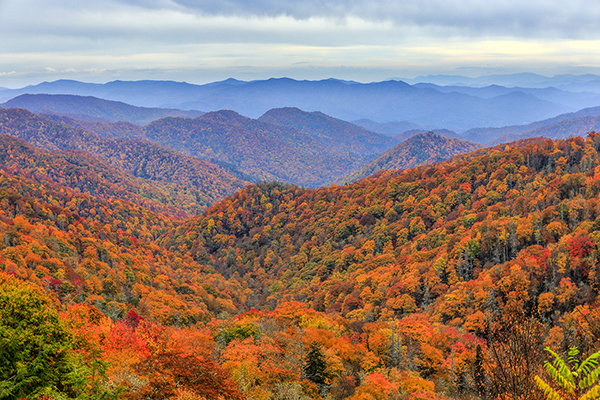
But there’s also evidence connecting nature and trees to our health and happiness. We live in a wonderful community surrounded by forests and mountains. Hiking in the woods is a great way to improve your sense of well-being.
There are a number of wonderful books that frequently come into Bookends through generous donations that speak about our environment and the importance of trees. Check out Bookends, our used bookstore, for books about trees and nature in general. Nature and Environment books can be found on the top two shelves above Math & Science. Perhaps you might find some of the following books.
- The Hidden Life of Trees by Peter Wohlleben: An intimate account of how trees grow, socialize (yes, they do), interact with their environment, and even feel.
- The Journeys of Trees by Zach St George: A portrait of forest migration and the obstacles they face.
- Nature’s Temples by Joan Maloof: A comprehensive introduction to old-growth forests and the fragile majesty of our ancient trees.
- The Overstory by Richard Powers: A novel of the interconnected and magnificently inventive world almost invisible to us, and a handful of people who learn to see that world and its unfolding catastrophe. (This would be found in Fiction.)
- The Secret Life of Trees: How They Live and Why They Matter by Colin Tudge: A book about the history, mechanics and survival of trees.
- The Songs of Trees by David George Haskell: An observation on specific trees and the interconnectedness with other life around them, including history, ecology and wellness.
Other nature writers to look out for include Rachel Carson, Loren Eiseley, Ralph Waldo Emerson, John Muir and Henry David Thoreau.
Trees are Nature’s Breath and preserving our old-growth forests and mature trees is necessary to our very survival.
 Friends of Pack Library